Helo Girl
Pleiku Helo

The photomontage consists of a little girl with the hula hoop and was taken right after my father returned from his first tour in Vietnam in 1957. The helicopter image is from around 1967 during my father’s second tour there, in which he was KIA in a helicopter crash. We circle and spin through life innocent of unintended consequences that will shape us all. I feel that if we don’t learn from our history, war and otherwise, we are forever doomed to repeat it.
Pleiku Helo
Pleiku Helo
I thought the airfield would be more dramatic; perhaps holding rusted helicopter blades or destroyed mortars. It was, after all, the small concrete runway where my father’s helicopter took off; he was shot down 20 minutes later. The airfield was the reason I had come to Vietnam. There was a small shed at one end, abandoned.
The airfield was covered; reddish brown with coffee beans drying in the sun. I wonder how it felt being used, rather than as a point of killing, as a place of sustenance with no hint of the fog that held my father’s future.
Ho Chi Minh Trail
Confronting History
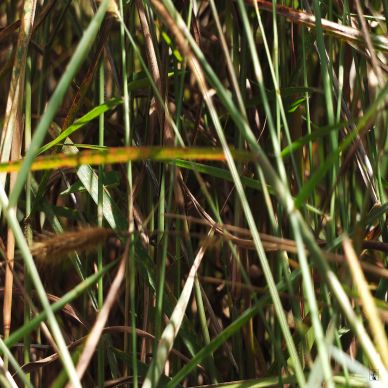
I’ll never forget the very first image I ever printed – a black and white frame full of English ivy from a friend’s backyard. I didn’t know it at the time, but photography would become the window through which I could examine my relationship with my father and the country, Vietnam, where he had been killed. It wasn’t until 47 years after his death in the war that I first visited Vietnam. Of all the photographs I took there, the ones I feel closest to are images from deep within the Ho Chi Minh Trail. I’m not sure what parallels can be drawn from a Houston garden and a logistics route, but both were prized by the people who lived there.
Confronting History
Confronting History
Confronting History

Conventional wisdom says that if we do learn from history, we won't repeat the failings of the past. However, history of war seems to bear out the opposite: it also appears to be true that those who do learn history are doomed to repeat it. It seems as though each layer of history - the years, the wars - don't completely cover the preceding time. The years may fog the memories; the years may distort the memories - the fencing in this image may be trying to keep memories and events blocked entirely. What side are you on?
Protection
Confronting History
The Doll's Dress
In a land far away, in a time long ago, Vietnam was deluged by rain that just wouldn’t stop. Lands and homes were flooded until a graceful goddess descended from the sky. Upon her head was an enormous hat made of large leaves stitched together by bamboo sticks. This large hat was able to guard the people against the rain; the goddess dispelled the clouds and rain, allowing the people to return back to a normal life. The conical hat or Non La has evolved over the years, and has identified and protected generations of Vietnamese. Unfortunately, it did not protect against invaders.
The Doll's Dress
Confronting History
The Doll's Dress
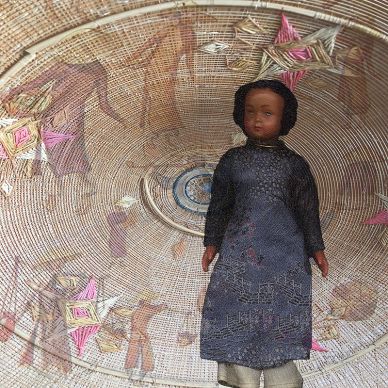
This doll has seen better days. I’m glad I was able to photograph her before she became too tattered. Currently all that remains is the áo dài, the Vietnamese traditional dress worn by men and women. It consists of two parts: a long upper dress with a deep slit on both sides and a plain baggy pant. My doll brought to me by my dad from his 1957 tour in Vietnam wears the fitted version updated by Saigon tailors in the 1950s. Her dress has the high stand-up collar complete with a brass necklace. The pattern details a placid scene unaware of the conflict yet to come.
How to Measure Women's Clothes
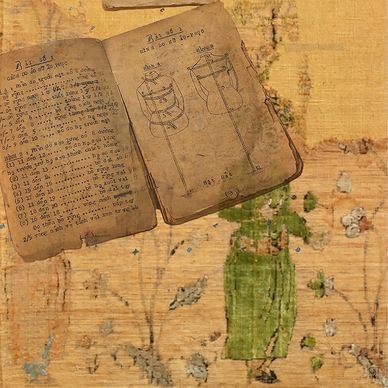
My first Home Ec class was in the 7th grade; this class was required for all girls.
I can still see the layout of the room and my spot at my assigned sewing machine. The teacher handed me the Simplicity pattern for a box pleat full skirt. Nothing about the pattern made sense – there were lines and numbered instructions on the tissue thin paper. I did manage to pin and cut out the pattern on a stiff heavy cotton the color of denim. However, I got a poor grade because although the pleats were perfect, my hem was not. Not too long after that, my dad was killed in Vietnam, nothing about that made sense either.
Windows to War
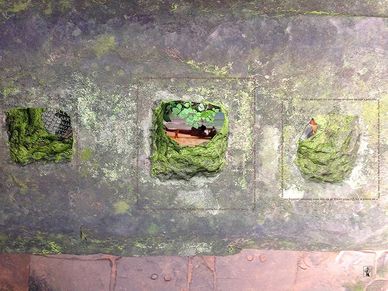
When my husband and I looked out of windows in Vietnam in 2014, we saw very different images than what my dad saw in 1967. I suspect the 1967 windows were flaps in green army tents; maybe some plastic covering to protect from the elements. When soldiers looked at the beach during the war, they saw helicopters landing unloading personnel and watched their comrades slogging through the sand. Unless, of course, they were surfing at China Beach, a popular 3-day R&R destination during the conflict. When we looked out our various windows we saw a peaceful country – lush and green in the countryside, full of motorbikes in the cities. When we looked out our various windows we saw a peaceful country – lush and green in the countryside, full of motorbikes in the cities. When we looked at the Qui Nhon beach, all we saw were fishermen paddling their basket boats and rugged rock formations. No soldiers were surfing. The water was still. Having a big sale, on-site celebrity, or other event? Be sure to announce it so everybody knows and gets excited about it.
Seeing the Consequences
Seeing the Consequences
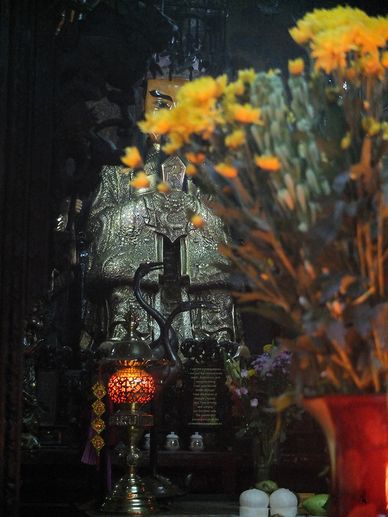
I see the consequences – not just the obvious ones, such as death, destruction, and nation-building. I see social change. I see generational health damage. I see decimation of lifestyle choices. I see thriving and coming out the other side. Could this be the unintended consequences of the unintended consequences?
Battle Fatigues
Seeing the Consequences
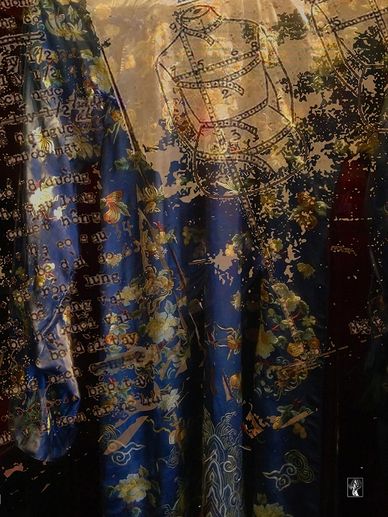
I watched in a Cu Chi tunnel room as a small Vietnamese woman sat at a treadle sewing machine making loose black tops and bottoms that resembled pajamas. She’s demonstrating creating uniforms for the Vietcong solders who came and went from the tunnels as they fight the American War. So different from my dad’s so-starched fatigues that he has to use a knife to separate the pant legs from each other. He started at the bottom of one leg and swiveled the table knife back and forth as he moved up towards the zipper. He moved the knife to the other pant leg and repeated the motion – the scratchy sound of cotton fabric separating filled the room where he repeated this process on the dining room table on a daily basis.
Road to the South
Road to the South
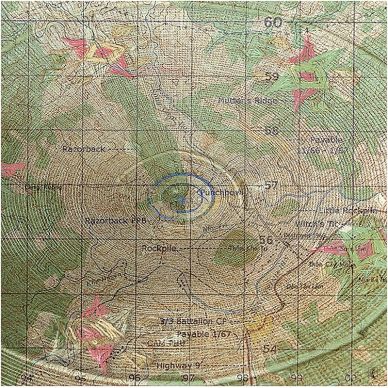
My dad, as one of less than a thousand US military advisors, was deployed to Vietnam in 1957. During this time, American advisors were not put in high-ranking positions; they weren’t even supposed to be there. President Diem feared the US would gain control over his forces if he put them in tactical positions. The early part of 1957 found South Vietnam enjoying its first peace in over a decade. It must have been during that time that my dad was able to send back postcards, a Vietnamese doll, and a traditional conical hat. This image integrates the inside of the hat with its now faded embroidery into an early military map of Vietnam.
Funeral Burning
Road to the South
Of course we had a funeral for my father once his body had been returned from Vietnam. Forty-seven years later, there was another funeral for him in Vietnam at a cemetery for unknown soldiers. We burned items, including paper money, that my father would need on the other side. This time I understood what a funeral was really for.